Pelletized Activated Carbon Market 2026–2027: Demand, Prices & Buying Guide
Search for pelletized activated carbon market and you will find dozens of paid reports with very different numbers. This guide pulls the useful parts together for buyers: where demand is coming from in 2026–2027, what is pushing prices, and what an importer or plant engineer should check before choosing a pelletized activated carbon supplier.
What is pelletized activated carbon?
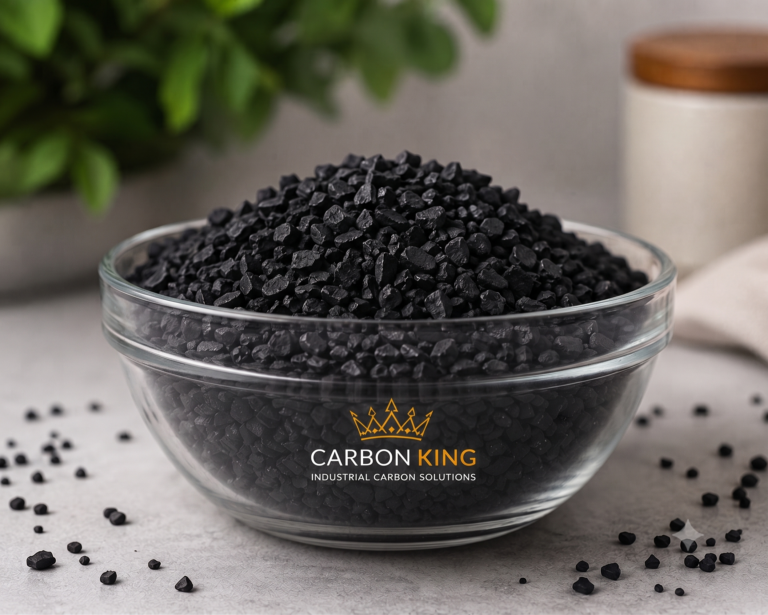
Pelletized (extruded) activated carbon is powdered carbon mixed with a binder, pressed into uniform cylinders – usually 3–4 mm – and then activated. The even shape lets a bed pack uniformly, so gas passes with a low pressure drop and very little dust. That is why pellets are used mainly for air and gas streams, while granular activated carbon is the usual choice for water and liquids.
Carbon King makes coal based pelletized activated carbon in 4 mm pellets with CTC 30, 50 and 60 grades (iodine value 700, 850 and 950 mg/gm) and 98% (min) hardness.
Pelletized activated carbon market size: what the reports say
Market research firms do not agree on one number, mainly because they define the segment differently and use different base years. Two recent examples:
- TechSci Research puts the global pelletized activated carbon market at about USD 6.43 billion in 2025, growing to about USD 8.32 billion by 2031 (around 4.4% a year).
- Market Research Future estimates about USD 3.1 billion in 2024, rising to about USD 5.0 billion by 2035.
For the wider activated carbon market (powdered, granular and pelletized together), most 2026 reports show growth of roughly 7–10% a year to 2035, with Asia Pacific as the largest region. For a buyer, the exact figure matters less than the direction: demand is rising steadily, and good-quality supply is not getting cheaper.
What is driving demand in 2026–2027
1. Biogas and natural gas purification
As more organic waste is turned into energy, biogas plants need pellets to remove hydrogen sulphide, siloxanes and other impurities before gas reaches engines or the grid. Industry reports name biogas and natural gas purification as one of the main growth drivers for pelletized carbon.
2. Tighter air-quality and emission rules
Rules on volatile organic compounds (VOCs), odour, mercury and other emissions keep getting stricter in many countries. Pellet beds are a simple, proven way for factories, refineries and waste sites to meet those limits.
3. VOC and solvent recovery in manufacturing
Printing, coating, chemical and pharmaceutical plants use high-CTC pellets to capture and sometimes recover solvents. As production grows in Asia, the Middle East and Africa, so does this demand.
4. Odour control at wastewater and waste sites
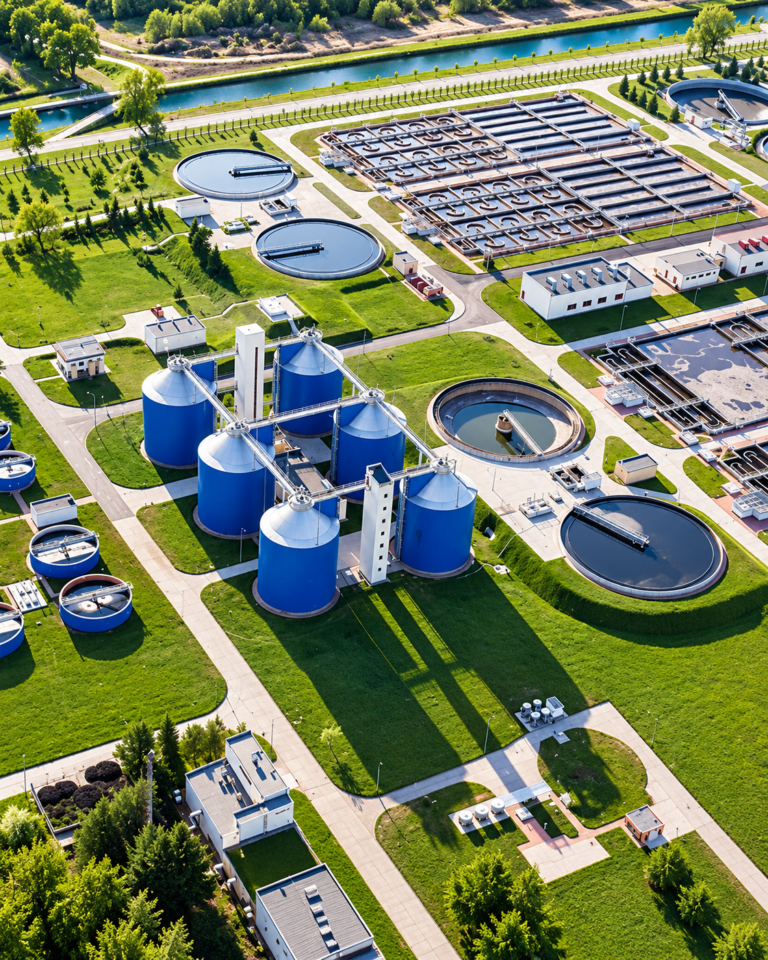
Growing cities mean more wastewater treatment plants, pumping stations and waste facilities close to homes. Odour complaints push operators to install carbon filters – a steady, recurring demand because the carbon must be replaced.
5. Industrial growth in the GCC, Turkey, Egypt and South Asia
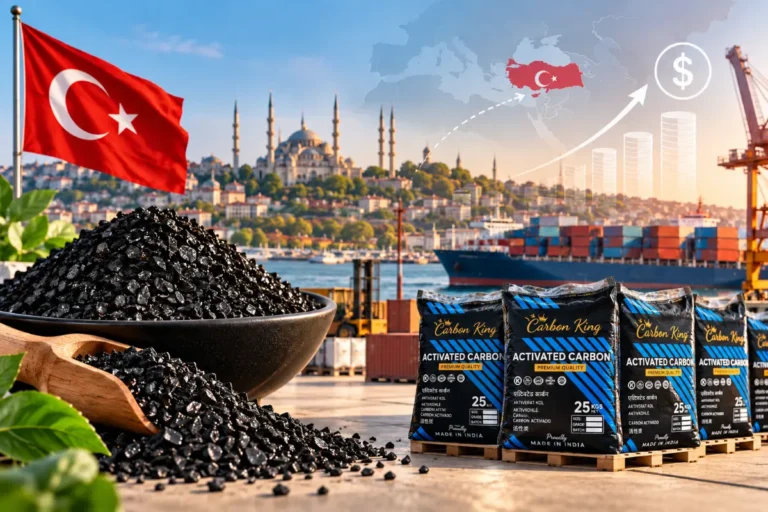
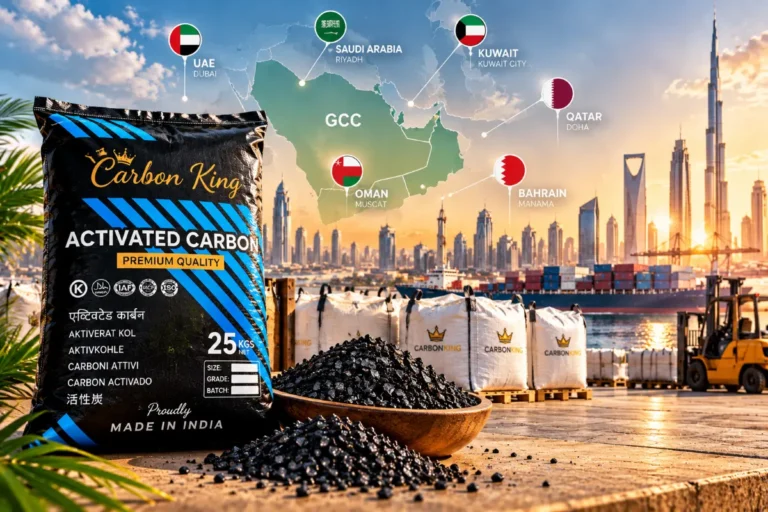
New refineries, petrochemical plants, desalination and utilities in the Gulf and nearby regions keep adding gas-phase filtration duty. See our pages for the GCC, UAE, Saudi Arabia, Turkey and Egypt.
What is pushing prices
- Raw material cost: reports point to volatile prices for bituminous coal and coconut shell as a main challenge for producers.
- Energy cost: activation runs at high temperature, so fuel and power prices feed straight into carbon prices.
- Freight: container rates and route disruptions change the landed cost more than many buyers expect.
- Quality grade: a higher CTC or an impregnated grade (for example for hydrogen sulphide) costs more to make than a standard grade.
Because of this, buyers who lock in a grade, a steady monthly quantity and a reliable supplier usually get more stable prices than those who buy spot.
How to choose a pelletized activated carbon supplier in 2027
Market size does not matter much if your supplier cannot ship the same quality every time. Before you place an order, check these points (our guide on how to choose an activated carbon supplier has more detail):
- Manufacturer or trader? A manufacturer controls raw material and activation, so batches stay consistent.
- Full specification: CTC, iodine value, hardness, apparent density, pellet size and moisture – on a technical data sheet, not just a sales line.
- Certificate of analysis with every batch, tested to recognised methods such as ASTM.
- Sample before bulk: test the pellets in your own system first.
- Packing and documents: bags or bulk bags, labelling, and complete export documents for your customs.
- Capacity: can the supplier support your monthly and yearly volume?
Which grade is right for you?
- CTC 30 – light odour and air polishing.
- CTC 50 – general VOC and odour control.
- CTC 60 – heavy VOC loads, solvent recovery and demanding gas streams.
- Impregnated grades – for acidic gases such as hydrogen sulphide.
If your stream is water or another liquid, choose granular or powdered activated carbon instead. Our coconut shell vs coal vs wood guide explains raw-material choices.
Regional snapshot for buyers
- GCC (UAE, Saudi Arabia, Qatar, Oman, Kuwait, Bahrain): gas processing, refineries, desalination plants and large utilities create steady gas-phase and odour-control demand. Most buyers import, so reliable shipping and documents matter as much as price.
- Turkey: a strong chemical, textile and manufacturing base means demand for VOC control and solvent recovery, plus a growing biogas sector.
- Egypt and North Africa: expanding wastewater treatment and industrial zones are adding odour-control and air-treatment duty.
- India and South Asia: fast industrial growth and tighter pollution control rules are lifting demand for both pellets and granular carbon.
What to put in your request for quotation
A clear enquiry gets you a faster and more accurate price. When you ask suppliers for pelletized activated carbon, include:
- Application and gas stream (for example biogas, VOC from a coating line, odour from a pumping station)
- Main contaminants and their approximate levels
- Required grade or CTC value, pellet size and any impregnation
- Quantity per order and per month or year
- Packing (bags or bulk bags) and labelling needs
- Destination port and preferred Incoterm
- Documents and tests you need with each shipment
With these details, a manufacturer can recommend the right grade instead of quoting a generic product, and you can compare offers like for like.
About Carbon King
Carbon King is an activated carbon manufacturer and exporter from India, in carbon since 1994, with 30,000 MT of annual capacity and buyers in 18+ countries. We supply granular, powdered and pelletized activated carbon and anthracite filter media, with a certificate of analysis on every batch and samples before a bulk order.
Frequently asked questions
How big is the pelletized activated carbon market?
Estimates differ by report. TechSci Research puts it at about USD 6.43 billion in 2025, and Market Research Future at about USD 3.1 billion in 2024. Both expect steady growth into the 2030s.
What is driving pelletized activated carbon demand?
The main drivers are biogas and natural gas purification, stricter air-quality and emission rules, VOC and solvent recovery in manufacturing, and odour control at wastewater and waste sites.
Why are pelletized activated carbon prices rising?
Raw material (coal and coconut shell) and energy costs are volatile, freight costs change, and higher grades cost more to make.
Is pelletized activated carbon used for water treatment?
It can be, but pellets are designed for gas flow. For most water and liquid treatment, granular or powdered activated carbon is the better choice.
Need pelletized activated carbon for your plant or distribution business? Contact Carbon King or WhatsApp +91 89104 04400 with your gas, flow and monthly quantity, and we will recommend a grade and send a quotation.